Your body never forgot. You just stopped listening to it.
by Matthew Zoltan, co-creator of the Undo APP
Why memory is not a thought — and why that changes everything about how trauma is healed.
There is a moment, early in my work with people, when something shifts. Not in their understanding of what happened to them, but in how they are experiencing themselves right now, in the room, as we sit together.
They stop trying to remember. And they start to feel.
Most of us have been taught, by therapy, by culture, by well-meaning people, that the path through trauma is to go back to what happened, understand it, process it, and eventually make peace with it. Tell the story often enough, the thinking goes, and we’ll stop being haunted by it.
But here is what nearly forty years of working with people has shown me: the story is not where trauma lives.
Trauma is not a memory you can recall. It is a memory your body never let go of.
When something overwhelms the nervous system, not emotions by distressing, but genuinely overwhelming, a shock, the cognitive mind goes offline. What remains to pure sensation. A felt imprint. And the imprint does not hold the way narrative memories hold. It sits in tissue, in posture, in the quality of how it feels to be you right now. In mood without apparent cause. In fatigue that sleep doesn’t fix. In a fear that seems disproportionate to what is in front of you.
This is why talking about trauma so often fails to move it. Talk therapy operates at the level of cognition. But the wound is below that level. In the body’s own record of what it survived.
There is something else that is almost entirely missing from our understanding of trauma. Surgery. Most people do not know, and were never told, that anaesthesia prevents conscious experience, but the living organism still registers tissue harm. The body undergoes it. Records it. And without informed, body-based aftercare, cannot move forward. The medical system has no frameworks for this. Which means millions of people are living with trauma from procedures meant to heal them, with no language for what their body’s carrying and no path to resolve it.
The body is not metaphorical. It is the location of the wound, and the location of the healing.
In the first episode of this new series, I go into all of this in detail. Not as theory. As the practical foundation for every piece of healing work that follows. We cover what memory actually is at a biological level, how shock creates amnesia without erasing the felt experience, why re-traumatisation happens (and why it doesn’t have to), and what it means to go toward distress rather than away from it. To feel it as part of being you, rather than as something to be fixed or managed or resolved from a safe cognitive distance.
This is the understanding I wish every healer had before they began. And it is the understanding that makes everything else in this series possible.
Episode 1 is free. No account required. Watch it, share it, send it to anyone who needs it.
Episode 1: Understanding Trauma, Memory, and Dissociation
90 minutes · Matthew Zoltan · Available now on the Undo app & on Youtube
[Watch episode 1 →]
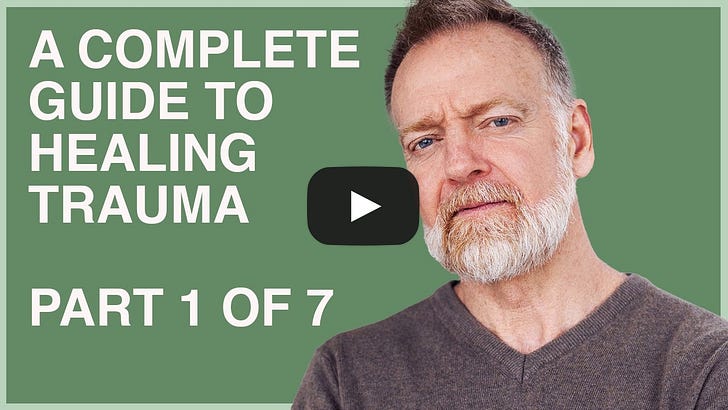
The full series – available in my app – runs to seven episodes. Each one builds on what came before. If this resonates — with your own experience, or with the people you work with — episode 1 is the place to begin.
Use promo code MZTRAUMA if you buy the full episode bundle in the app and you will get 10% off.
ONE | Understanding Trauma, Memory, and Dissociation
An exploration of trauma, memory, and dissociation through the understanding that what shapes us is not what we think about our past, but what the body is still holding. Revealing the poorly understood topic of memory, introducing an understanding required for all healers. Matthew Zoltan outlines why memory is fundamentally physical, how trauma creates amnesia through shock, and why healing requires reconnecting with the felt experience of the body rather than analysing the story of what happened.
Key points covered in this episode:
The importance of Embodied Meditation and why this heals trauma.
Introduction and episode structure: “Memory, Amnesia and Trauma”
Matthew’s exposure to dissociation in monastic life and the harm of “good vs bad” thinking
Breakthrough: memory as sensation, thought as body activity, and the collapse of mind/soul assumptions
Trauma defined: shock, causing cognitive shutdown, leaving only “felt memory,” and how symptoms persist without memory recall.
How reconnection with felt memory heals the pain, leads to cognitive recall of the associated event, and healing the confusions of false self-perceptions and undermining beliefs.
Why you can’t “think your way” to the cause but need to feel it within you.
Why talk therapy, maintains dissociation, suppression and reaction to it.
How trauma exists in how it feels to be you, shaping mood, fear, fatigue, and affecting all daily functioning.
Post-surgery trauma: the lasting harm from surgery and the informed after care that is missing from the medical system.
Re-traumatisation reframed and why body-based work changes the loop.
How the ongoing failure to heal trauma is itself increasing hopelessness, reaction and fear.
Returning to the body: dissolving the split between “me” and sensation, plus a detailed retreat case study
Practical principles: go toward the distress rather than away from it.
Closing reflections:
memory held in tissue and blood.
Education and religion explained as a dissociation training, and what’s coming next